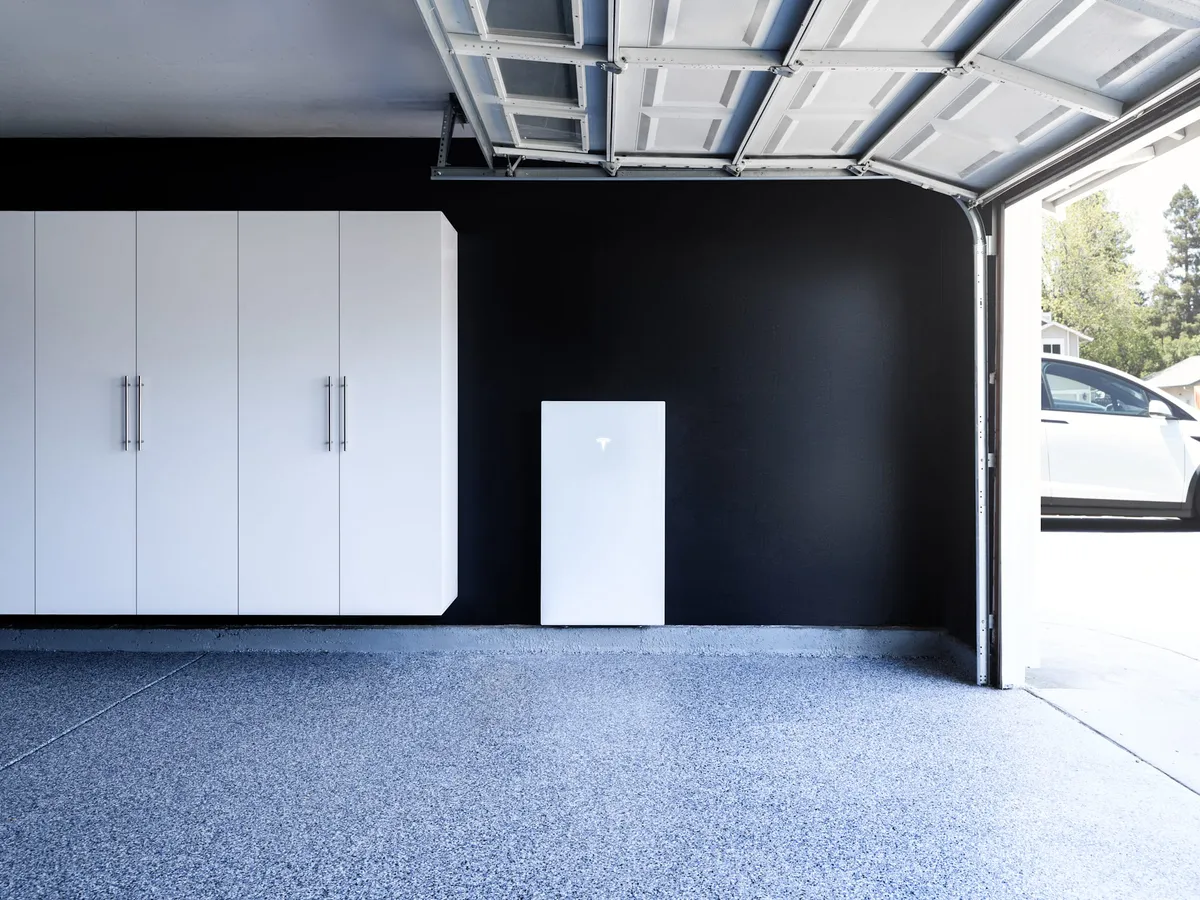
High-load equipment changes battery planning because the design must account for what you want available at the same time, what can be deferred, and what should be excluded during an outage. Ask Solar Mike starts with HVAC, EV charging, pool equipment, well pumps, and other major loads, then defines the backup scope and only then considers equipment .
The practical question is not simply, “Can a battery run this appliance?” It is, “Which loads must work together, for how long, and under what operating rules?” Start with the full sizing framework in How Many Powerwalls Does a Utah Home Need?, then use the worksheet below to make your own priorities explicit.
Ask Solar Mike is focused on Tesla solar and Powerwall 3 planning for Utah homes . The same planning method applies across Utah, but the final architecture still depends on the actual home and its verified electrical service .
Why does simultaneous use matter more than an appliance list?
A list tells the designer what exists. A sequence tells the designer what could happen. Two homes may have the same HVAC system, EV charger, pool pump, and kitchen equipment yet need different backup plans because the owners expect to use them differently during an outage.
Imagine three operating plans. In the first, HVAC remains a priority while EV charging pauses. In the second, the well pump and refrigeration take priority while pool equipment waits. In the third, the homeowner expects normal operation with very little manual intervention. Those are different design briefs even though the equipment list is identical.
This is why “whole-home” should not be treated as a vague promise. The useful definition is an agreed operating plan: what stays available, what may be controlled, what may be deferred, and what happens when several large loads request power together. Ask Solar Mike supports designs for both 200A and 400A main service panels, while the backup architecture is confirmed through site verification and engineering . For more context, see the Tesla Powerwall 3 guide for Utah homes.
How should HVAC change the plan?
Treat HVAC as a comfort decision and an operating-rule decision, not just a line on an electrical panel. Decide whether heating or cooling must remain available continuously, whether a reduced operating mode is acceptable, and which other large loads may be paused while HVAC starts or runs.
Document every piece of connected heating and cooling equipment rather than writing only “HVAC.” A home may have more than one zone, supplementary equipment, or separate systems serving different areas. The design conversation should identify which parts are essential and which are optional during an outage.
Also define the homeowner’s action threshold. Some people are comfortable changing settings and pausing other equipment. Others want a plan that requires fewer decisions. Neither preference is inherently right; each produces a different control strategy.
How should EV charging change the plan?
EV charging adds a flexible load that can often be scheduled around other priorities. The key planning questions are whether charging is needed during an outage, how much driving must be restored, and whether the homeowner accepts pausing charging when another priority load needs power.
Avoid the vague requirement “keep the car charged.” Replace it with a rule that can guide design. For example: charging may wait until household loads are quiet; charging may be excluded from outage operation; or a short charging session is a priority because the vehicle supports essential travel. The homeowner chooses the priority. The design translates that choice into an operating plan.
If an EV is likely to be added later, record that future load now. Planning for a known change is more useful than pretending the house will remain electrically unchanged.
How should pools and spas change the plan?
Pool and spa equipment should be separated into functions. Circulation, heating, cleaning, water features, and other accessories do not necessarily share the same outage priority. A useful plan identifies which function protects the property, which supports comfort, and which can wait.
Ask what happens if the outage is brief, then ask what happens if it lasts longer. The answer may change over time. A homeowner might defer pool operation at first, then allow a defined circulation window later. Writing that sequence down gives the designer something concrete to evaluate.
How should a well pump change the plan?
A well is not merely another convenience load when the household depends on it for water. Battery planning should document the pump equipment, any supporting controls, the water-storage arrangement, and which water uses matter during an outage. Do not assume that the label “well pump” gives the designer enough information.
Think in events rather than averages: the pump is called, another priority load is already operating, and the household still expects the selected circuits to remain available. Site verification and engineering determine the final backup architecture for the actual home .
What should go in a high-load planning worksheet?
Use one row for each major load or function. Complete the worksheet, then debate battery quantity:
| Planning field | Question to answer |
|---|---|
| Load or function | What equipment or household need are we protecting? |
| Outage priority | Must it run, may it run, or should it wait? |
| Overlap | Which other major loads may be active at the same time? |
| Operating rule | Can it be scheduled, paused, rotated, or manually controlled? |
| Fallback | What will the household do if this function is unavailable? |
| Future change | Is another vehicle, HVAC zone, pump, or appliance likely to be added? |
Bring model information, panel photos, and a clear description of your outage priorities to the design review. The goal is not to make the homeowner perform electrical calculations. The goal is to prevent unstated assumptions from becoming design requirements.
How does this affect 200A and 400A homes?
Service size is an important input, but it does not answer the backup question by itself. Ask Solar Mike designs for 200A and 400A service panels, and 400A homes can be served; site verification confirms the backup architecture for the property .
The design review should map service equipment, selected backup loads, expected overlap, and control preferences. Every system design is produced and reviewed by a licensed engineering firm . That process turns the homeowner’s worksheet into a site-specific plan rather than a generic appliance checklist.
Utility service in south Utah County varies by address, so Ask Solar Mike confirms the serving utility as step one . That check is separate from load planning, but both belong in the same project record so the proposal reflects the actual home.
Which mistakes make battery planning less useful?
- Counting appliances without deciding which ones must operate together.
- Treating every connected load as equally important.
- Using “whole-home” without defining operating rules.
- Ignoring future additions that are already being considered.
- Choosing equipment without documenting the outage priorities.
- Assuming that a service-panel label settles the architecture.
A stronger plan replaces each assumption with a decision. If a load is essential, say why. If it can wait, define when it may return. If the answer depends on site conditions, mark it for verification instead of guessing. You can also read What Will a Powerwall System Run During a Utah Power Outage? for the next step in turning priorities into an outage plan.
Frequently asked questions
Does owning an EV automatically mean I need a different battery plan?
It means EV charging should be documented as a separate decision. Whether it remains available, pauses, or stays outside the outage plan depends on the homeowner’s travel needs and the final site-specific design.
Can pool equipment be treated as one load?
It is more useful to separate circulation, heating, cleaning, and accessories by function. That lets the homeowner rank property protection, comfort, and optional operation instead of assigning one priority to everything.
Is a 400A service panel a reason to stop considering Powerwall planning?
No. Ask Solar Mike supports 200A and 400A main service panels; the architecture is confirmed at site verification .
Who decides which loads are essential?
The homeowner defines the household priorities. The design process tests those priorities against the actual electrical system and turns them into a practical backup plan.
Last reviewed: 2026-09-25. Reviewed by Mike Morris, Founder, Ask Solar Mike .
